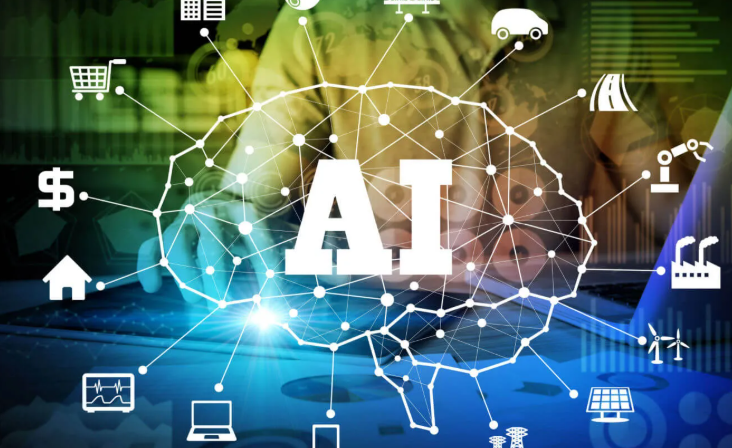

AI & Artificial Intelligence: A Complete Guide to How It Works, Benefits, Types, Applications, and Future
Artificial Intelligence (AI) has become one of the most revolutionary technologies of the 21st century. From smartphones and virtual assistants to self-driving cars and advanced healthcare systems, AI is transforming the way people live and work. Businesses are using Artificial Intelligence to automate repetitive tasks, improve customer experiences, analyze large amounts of data, and make better decisions. As AI continues to evolve, it is becoming an essential part of everyday life and the future of technology.
What Is AI & Artificial Intelligence?
Definition of Artificial Intelligence
Artificial Intelligence (AI) is the simulation of human intelligence in machines that are programmed to think, learn, solve problems, and make decisions. Unlike traditional computer programs that follow fixed instructions, AI systems can analyze data, recognize patterns, and improve their performance over time.
The main goal of Artificial Intelligence is to create machines that can perform tasks requiring human intelligence, such as understanding language, recognizing images, translating text, and making predictions.
How Does Artificial Intelligence Work?
Data Collection
Artificial Intelligence begins with collecting large amounts of data from websites, mobile apps, sensors, images, videos, and databases. High-quality data allows AI systems to learn and improve their accuracy.
Machine Learning
Machine Learning is a branch of AI that enables computers to learn from data without being explicitly programmed. Machine learning algorithms identify patterns, make predictions, and continuously improve as more data becomes available.
Deep Learning
Deep Learning is an advanced form of machine learning that uses artificial neural networks inspired by the human brain. It powers technologies such as speech recognition, facial recognition, image classification, and language translation.
Decision Making
After processing information, AI systems make decisions or predictions based on patterns found in the data. This ability allows AI to automate tasks and solve complex problems efficiently.
Types of Artificial Intelligence
Narrow AI
Narrow AI, also called Weak AI, is designed to perform specific tasks. Examples include voice assistants, recommendation systems, spam filters, and facial recognition software. Most AI applications available today fall into this category.
General AI
General AI refers to machines capable of performing any intellectual task that a human can perform. Although researchers continue working toward this goal, General AI has not yet been achieved.
Super AI
Super Artificial Intelligence is a theoretical concept where machines become more intelligent than humans in every aspect, including reasoning, creativity, and emotional intelligence. This technology remains hypothetical.
Benefits of Artificial Intelligence
Improves Productivity
Artificial Intelligence automates repetitive and time-consuming tasks, allowing businesses and employees to focus on more strategic work.
Better Decision Making
AI analyzes massive datasets quickly, helping organizations identify trends, reduce risks, and make data-driven decisions.
Increased Accuracy
AI minimizes human errors in industries such as healthcare, finance, and manufacturing by providing precise analysis and predictions.
Enhanced Customer Experience
Businesses use AI-powered chatbots, recommendation systems, and virtual assistants to deliver personalized customer experiences and provide instant support.
Cost Savings
Automation reduces operational costs by increasing efficiency, minimizing manual work, and improving resource utilization.
Applications of Artificial Intelligence
Healthcare
Artificial Intelligence helps doctors diagnose diseases, analyze medical images, discover new medicines, and provide personalized treatment recommendations. AI-powered systems improve patient care and reduce diagnostic errors.
Education
Educational platforms use AI to personalize learning, automate grading, recommend study materials, and offer intelligent tutoring systems.
Finance
Banks and financial institutions rely on AI for fraud detection, credit scoring, investment analysis, customer support, and risk management.
Retail
Retail companies use Artificial Intelligence to recommend products, forecast demand, optimize inventory, and improve customer engagement.
Manufacturing
Manufacturers implement AI for predictive maintenance, quality control, robotics, and supply chain optimization, leading to higher productivity and reduced downtime.
Transportation
AI powers navigation systems, traffic prediction, autonomous vehicles, route optimization, and logistics management, making transportation safer and more efficient.
Entertainment
Streaming platforms like Netflix and music services use Artificial Intelligence to recommend personalized content based on user preferences and viewing history.
Everyday Examples of Artificial Intelligence
Artificial Intelligence has become part of daily life. Common examples include:
- Voice assistants such as Siri and Google Assistant
- Netflix and YouTube recommendations
- Online shopping suggestions
- Email spam filters
- Smartphone facial recognition
- Google Maps navigation
- AI writing assistants
- Smart home devices
- Language translation tools
- Customer service chatbots
These technologies improve convenience, productivity, and user experiences.
Challenges of Artificial Intelligence
Privacy Concerns
AI systems require large amounts of data, making privacy and data protection important considerations.
Bias and Fairness
AI models trained on biased datasets may produce unfair or inaccurate results. Developers must ensure fairness and transparency during AI development.
Job Automation
Artificial Intelligence automates many repetitive tasks, changing the nature of work. While some jobs may be replaced, new opportunities continue to emerge in AI development, data science, and technology.
Security Risks
Cybercriminals can misuse AI to launch advanced cyberattacks, making cybersecurity a growing priority for businesses and governments.
Ethical Issues
Responsible AI development requires accountability, transparency, fairness, and human oversight to ensure technology benefits society.
The Future of Artificial Intelligence
The future of Artificial Intelligence is filled with exciting possibilities. AI will continue transforming industries through automation, robotics, generative AI, and intelligent decision-making. Healthcare, education, finance, transportation, agriculture, and manufacturing are expected to experience significant advancements powered by AI technologies.
As AI becomes more sophisticated, organizations will invest in responsible AI practices to ensure privacy, fairness, and ethical decision-making. Individuals who develop AI-related skills will have access to growing career opportunities in one of the world’s fastest-growing technology sectors.
Tips for Learning Artificial Intelligence
Learn Programming
Python is the most widely used programming language for Artificial Intelligence because of its simplicity and extensive AI libraries.
Study Machine Learning
Understanding supervised learning, unsupervised learning, and reinforcement learning provides a strong foundation for AI development.
Practice with Projects
Building real-world AI projects helps reinforce concepts and improve practical skills.
Stay Updated
Artificial Intelligence evolves rapidly, so following industry news, research papers, and educational resources is essential for continuous learning.
Frequently Asked Questions
What is Artificial Intelligence?
Artificial Intelligence is the ability of computer systems to perform tasks that normally require human intelligence, such as learning, reasoning, problem-solving, and decision-making.
Is AI the same as Machine Learning?
No. Machine Learning is a subset of Artificial Intelligence that enables computers to learn from data without explicit programming.
Where is Artificial Intelligence used?
AI is used in healthcare, education, finance, retail, manufacturing, transportation, agriculture, entertainment, and many everyday digital applications.
What are the advantages of Artificial Intelligence?
The main advantages include increased productivity, better decision-making, improved accuracy, enhanced customer experiences, automation, and cost savings.
Can Artificial Intelligence replace humans?
Artificial Intelligence can automate repetitive tasks but cannot replace human creativity, emotional intelligence, ethical judgment, and complex problem-solving abilities.
Conclusion
Artificial Intelligence is reshaping the modern world by improving efficiency, increasing productivity, and driving innovation across nearly every industry. From healthcare and education to finance and entertainment, AI is making technology smarter and more accessible. Although challenges such as privacy, ethics, and job automation remain, responsible AI development can maximize its benefits while reducing potential risks. As Artificial Intelligence continues to evolve, understanding how it works and how it impacts society will help individuals and businesses prepare for a future powered by intelligent technologies.